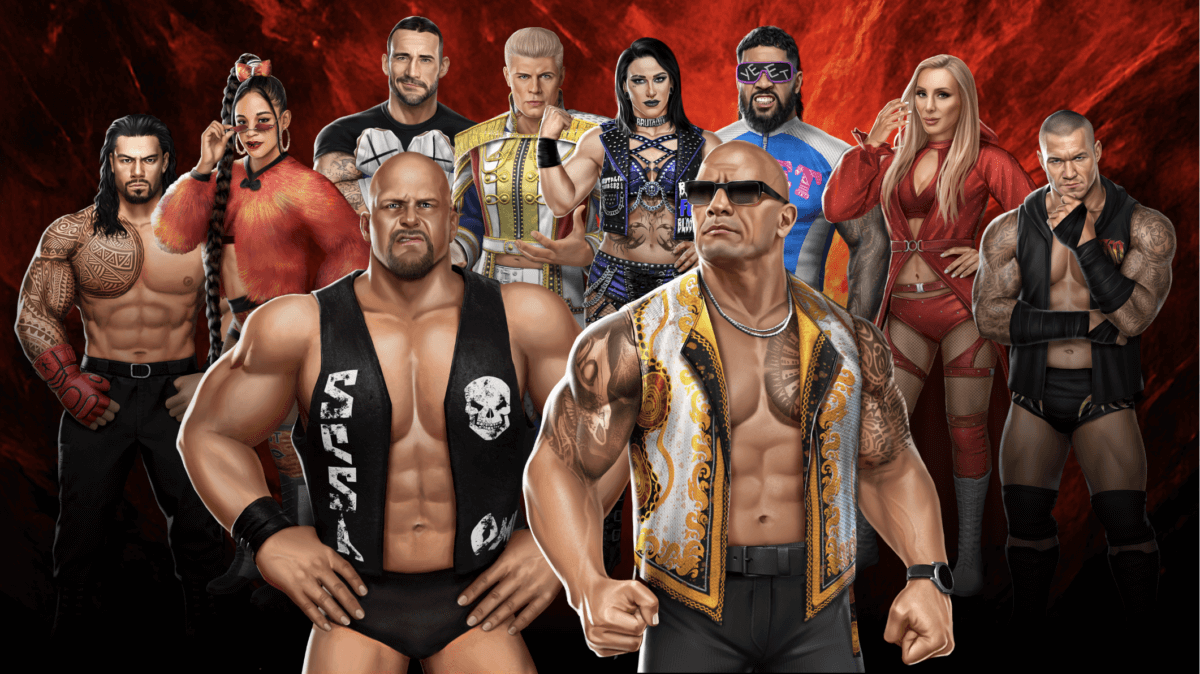
The Rock vs Stone Cold: Who Was the Bigger Attitude Era Star?
The Rock vs Stone Cold: Who Was the Bigger Attitude Era Star?
The greatest debate in wrestling history isn’t just a clash between two WWE icons, it also explains why the Attitude Era became so legendary. It’s a war between a flashy, charismatic, movie-star-in-the-making heel and an anti-establishment, blue-collar rebel.
Who are the legends we’re talking about? The Rock vs Stone Cold Steve Austin.
The Rock vs Stone Cold Steve Austin rivalry culminated in their legendary WrestleMania Trilogy (XV, X-Seven, and XIX), perfectly demonstrating what made the Attitude Era can’t-miss television. Austin dominated the start, defeating the Corporate Champion Rock at WrestleMania XV to become the franchise’s face, and winning again at WrestleMania X-Seven in a historic match marked by his shocking alliance with his bitter rival. The Rock secured the final victory at WrestleMania XIX, an emotional match that served as Stone Cold’s active career farewell.
So here’s the million-dollar question: Which star is better? Both are legends, but fans stay divided on the question.
To get answers, we break the debate into clear criteria:
Championships: Total belts and title wins.
Matches: Not only who wins, but where their matches appear on the card.
Cultural Impact: Who shaped wrestling culture the most.
Legacy: Whose influence is most evident with today’s Superstars.
Mainstream Success: Who became better known outside wrestling.
Now let’s break down the numbers, the moments, and the impact to settle this once and for all.
Stone Cold Steve Austin: The Texas Rattlesnake
Stone Cold Steve Austin quickly rose from mid-carder to megastar, becoming the centerpiece of WWE during the fierce Monday Night Wars with WCW. His 1996 King of the Ring victory launched the run that changed wrestling forever. His list of accomplishments includes being a six-time WWE Champion, two-time Intercontinental Champion, four-time Tag Champion, and the only three-time Royal Rumble winner in history (1997, 1998, 2001).
Defining Moments
At the height of his power, Austin would create defining Attitude Era visuals almost every week. His “Austin 3:16” speech became an instantly recognizable pop-culture catchphrase, and his storied rivalries, fueled by the chaos following the Montreal Screwjob, would reshape WWE’s tone.
This shift becomes clear through his wild stunts: driving a truck to the ring, filling McMahon’s prized Corvette with cement, and hijacking a Zamboni to crash a WWE Championship presentation before attacking McMahon once more.
Character & Persona
However, the peak Austin moment came when he shocked fans at WrestleMania X-Seven and allied with McMahon to defeat The Rock, executing one of wrestling’s most consequential heel turns.
At the time, Austin was something the wrestling world had never seen: a Superstar that seemed to be a direct reflection of the majority of wrestling fans but turned up to eleven. He was an aggressive middle-finger-flashing everyman who fights authority. He spoke for frustrated, blue-collar fans who watch him do what they wish they could: punch their boss to the cheers of millions of adoring fans.
His tongue-in-cheek catchphrase “Austin 3:16” and the no quarter given “That’s the bottom line…” also showed how immensely marketable he was to the public, further marking him as a singular talent.
Peak Years
Between 1998 and 1999, there was no bigger draw to not only WWE, but also throughout all of wrestling. Every time Austin swaggered on screen by marching on the walkway and diving into the ring, ratings spiked. His matches would headline the biggest shows as he’s often credited with pushing WWE beyond WCW in ratings during those years.
Internal link opportunity: “Experience Stone Cold’s dominance in WWE Champions” → link to Stone Cold character pages
The Rock: The People’s Champion
Career Highlights & Championships
While Stone Cold Steve Austin becomes the immediate breakout star of the late ’90s, The Rock builds a longer-term legacy defined by versatility, charisma, and major accomplishments.
Debuting as “Rocky Maivia,” a third-generation talent following his father Rocky Johnson and grandfather Peter Maivia, he rises quickly once he transforms into the charismatic leader of the Nation of Domination. From there, his championship résumé grew rapidly: eight WWE Championships, two WCW Championships, five Tag Team titles, and a win at the 2000 Royal Rumble. He also became the youngest WWE Champion at age 26, setting records early in his career and surpassing Austin in total world titles.
Defining Moments
Seeing his talent, WWE evolved his persona from the fan-favorite “People’s Champion” to the villainous “Corporate Champion.”
His rise accelerates as WWE evolves his persona from the beloved “People’s Champion” to the villainous “Corporate Champion.” This shift produces some of his most iconic moments, including his controversial championship win over Mankind at Survivor Series 1998, which solidified him as the face of the Corporation. His mainstream-breaking “This Is Your Life” segment became one of the highest-rated moments in RAW history. His loss to Steve Austin at WrestleMania X-Seven surprised fans, as The Rock had firmly become a top fan favorite. A decade later, his blockbuster clash with John Cena at WrestleMania 28, a symbolic “passing of the torch” to WWE’s next franchise star, marks another generational milestone.
Character & Persona
The Rock proves himself one of WWE’s most flexible and compelling performers, excelling as a heroic figure, an egotistical villain, and a comedic showman.
His signature finishers—the Rock Bottom and People’s Elbow—gained cultural traction far beyond wrestling, appearing in video games, merchandise, and fan discussions worldwide. His catchphrases (“If you smell what The Rock is cookin’!”, “Know your role and shut your mouth!”, “The Most Electrifying Man in Sports Entertainment”) infiltrates pop culture and further helps cement his legend.
A master of live performance, he blends sharp comedic timing with crowd interaction, creating segments that remain widely referenced decades later.
Peak Years
From 1999 to 2002, The Rock defined the Attitude Era alongside Austin while launching a Hollywood career that began with The Scorpion King (2002). This transition propels him into global Superstardom and allows him to build enduring influence in both wrestling and entertainment.
Head-to-Head Comparison: Who Was Bigger?
Determining the definitive winner in the Rock vs. Stone Cold debate requires a deep look at everything each man brought to the ring—athletic ability, storytelling, promo skills, drawing power, cultural impact, and long-term legacy. Their rivalry defines the Attitude Era, and examining each category reveals why fans still debate this matchup decades later.
In-Ring Ability & Match Quality
Stone Cold Steve Austin wrestles a stripped-down, bruising, aggressive style shaped by his 1997 neck injury. He avoids high-risk moves, instead using physicality, pacing, and precise “in-ring psychology” (the ability to tell a compelling story through body language, timing, and emotional stakes). Every punch and bump feels meaningful.
Classic examples include his submission match with Bret Hart at WrestleMania 13, his chaotic brawl with Dude Love at Over the Edge 1998, and his emotional No DQ match with The Rock at WrestleMania X-Seven.
The Rock, in contrast, is more athletic, fluid, and technically versatile. He moves with better speed, agility, and polish due to the higher stamina and cardio standards his moveset demanded. He excelled at elevating weaker opponents, carrying long matches, and adapting to different styles.
His Iron Man match with Triple H, the brutal “I Quit” match against Mankind, and the iconic “Icon vs. Icon” showdown with Hulk Hogan showcases his conditioning and improvisational chops.
Verdict: The Rock wins for pure wrestling skill and versatility, but Austin’s mastery of in-ring psychology was unmatched.
Mic Skills and Promo
Both are elite talkers, but each shines differently. Stone Cold is blunt, raw, intense, and completely believable. His promos cut straight to the point—aggressive, sharp, and grounded in authentic emotion. He excels at humiliating opponents with short, biting lines that feel unscripted. When he said, “If you put the letter S in front of Hitman, you have my opinion of Bret Hart,” fans immediately understood his down home, southern-fried wit.
The Rock, however, is the most versatile promo artist in WWE history. His style blends comedy, improv, theatrical pacing, and razor-sharp timing. He masterfully roasts opponents, interacts with the live crowd, and shifts between humorous and serious tones with ease. His promo where he cycles through other wrestlers’ catchphrases, including Bret Hart’s, alongside Shawn Michaels proves that The Rock is just at home at a comedy roast as he is knocking heads in the ring.
Verdict: This is very close, but The Rock edges it because he was more versatile and created more famous catchphrases
Drawing Power & TV Ratings
Stone Cold Steve Austin is unquestionably the main engine behind WWE’s victory in the Monday Night War. During Austin’s peak years (1998–1999), Raw reached its highest ratings ever, frequently hitting numbers above 8.0. His segments, in particular, were record setters and magnets for TV audiences. Live events and PPVs surged when Austin was champion.
The Rock also drew massive numbers, especially from 1999 to 2001. His “This Is Your Life” segment with Mankind remains the highest-rated Raw segment in history at 8.4. He moved merchandise, sold tickets, and brought in huge PPV buys. However, Austin was the more consistent draw at the height of the Attitude Era and is widely credited as the man who turned the tide against WCW.
Verdict: Stone Cold was the bigger draw during the Attitude Era because he was the most consistent and powerful force driving the ratings during the company’s most critical and successful years.
Cultural Impact and Recognition
Here the comparison shifts dramatically depending on the timeline. Stone Cold became the ultimate symbol of rebellion for millions of fans. “Austin 3:16” became the best-selling wrestling shirt of all time. His truck segments, his Zamboni entrance, and his constant, visceral war with Mr. McMahon instantly made him a household name. He represents blue-collar America’s fantasy of punching your boss to rabid applause. However, once Austin retired in 2003, his mainstream footprint remained relatively limited, despite a successful podcast and occasional film roles.
The Rock, meanwhile, transcends wrestling entirely.
He becomes one of the biggest movie stars on Earth, hosts Saturday Night Live, fronts major HBO series, creates multiple network shows, and garners over 380 million social media followers. The People’s Eyebrow, his catchphrases, and his persona remain instantly recognizable even for those who never watched WWE.
His fame today far exceeds anything achieved during his in-ring career.
Verdict: During the Attitude Era, Austin was the bigger cultural icon in wrestling. But for overall cultural impact (1997-Present), The Rock wins decisively.
Longevity and Legacy
Stone Cold’s prime is short but explosive. His run from 1996 to 2003 defined the Attitude Era, but his neck issues forced an early retirement. Post-retirement, Austin has repeatedly refused to do extended in-ring ruins and has stuck to one-off appearances. This shorter career arguably strengthens his legacy as he left while still beloved and never overstays his welcome.
The Rock benefits from long-term visibility. His Hollywood career keeps his name alive globally, and his periodic returns (2011–2013, 2016) build nostalgia while maintaining prestige. He maintains periodic WWE appearances through a part-time schedule that allows him to extend his wrestling career. Because he stays in the public eye, his legacy stretches far beyond wrestling.
Verdict: The Rock’s longevity and continuous presence in the public eye give him the edge.
Championships and Accolades
The Rock has more total World Championships (10) than Austin (6), and he has main evented more WrestleManias (5) than Austin (3). Austin, however, has an unmatched 3 Royal Rumble victories to The Rock’s 1.
The Rock is also credited with accruing better ratings for match variety and athleticism while Austin achieved massive merchandise sales and is hailed as having near-perfect in-ring psychology.
Both become foundational WWE legends and are inducted into the Hall of Fame—Rock in 2008, Austin in 2009.
Verdict: The Rock has more championship reigns and main evented more WrestleManias.
Their Epic Rivalry: WrestleMania Trilogy
Let’s break it down:
WrestleMania XV (1999): Austin beats the “Corporate Champion” Rock to win the WWF title. Austin stands at his peak while Rock still rises.
WrestleMania X-Seven (2001): Austin wins again, then shocks fans by aligning with hated rivals and turning heel — a moment fans still debate as career-defining.
WrestleMania XIX (2003): Rock wins in Austin’s announced final match. The bout serves as an emotional farewell while Rock’s Hollywood career already gains steam.
Verdict: They were equals at their peaks and each needed the other to reach greatness
What the Numbers Say: Merchandise & Revenue
When it comes to pure money-making power, both Stone Cold Steve Austin and The Rock stand at the top of WWE history. Their ability to sell merchandise and pack pay-per-views helped define the financial success of the entire Attitude Era.
- Merchandise Sales: Austin’s iconic “Austin 3:16” shirt is still the best-selling WWE shirt of all time. From 1998 to 2001, he dominated WWE’s merch revenue, outselling nearly everyone on the roster combined. The Rock wasn’t far behind. His shirts—especially his “People’s Champ” and “Know Your Role” designs—exploded in popularity from 2000 to 2002, making him one of WWE’s top sellers as well.
- Pay-Per-View Buyrates: Both wrestlers were proven draws. Their main events regularly pulled 500,000–700,000+ buys, making them the must-see stars of any major show. Whenever they faced each other, numbers jumped even higher. Their WrestleMania X-Seven match reached over 1 million buys, one of the highest totals in WrestleMania history and often cited as the Attitude Era’s financial peak.
Verdict: Statistically, they were even during the main Attitude Era years.
Fan Polls & Wrestling Community Opinion
The debate over The Rock vs Stone Cold is intensely personal for fans, and social media reflects this division. On platforms like Reddit’s r/SquaredCircle, a major hub for wrestling discussion, opinions often lean slightly toward Stone Cold Steve Austin due to his undeniable “Attitude Era impact” with the consensus being that he was the single most necessary element for WWE’s success against WCW.
Other factors to consider:
- Generational Divide: Fans who lived through the era (typically over 35) often maintain that Austin was “bigger in the moment,” citing the unprecedented electricity and ratings he generated week after week. However, younger fans who didn’t experience the 90s tend to favor The Rock because his massive Hollywood fame makes him appear bigger in retrospect.
- Media and Historians: Analysis from wrestling journalists and historians generally leans toward Austin when discussing the peak years of 1998-1999, validating his status as the company’s biggest draw during that critical window.
- Social Metrics: When the debate is taken to platforms like Twitter, polls frequently show a near-even split (often around 55-45, depending on the audience polled), highlighting that both men are virtually equal in modern popularity and nostalgic appeal.
Verdict: Undecided. While Austin was the greater force during the specific Attitude Era years, The Rock’s sustained relevance due to his post-wrestling success makes the argument an endless debate among the fanbase.
“Who do YOU think was bigger? Play as both legends in WWE Champions and decide for yourself.”
 The Final Verdict: Who Was Actually Bigger?
The debate’s final answer depends on when you freeze the timeline.
During the Attitude Era (1997-2002), every wrestling historian and article agrees: Stone Cold was the bigger star, period. He was THE face of WWE during the peak years of the Monday Night Wars, with ratings, merchandise (like the record-selling “Austin 3:16” shirt), and live events all peaking with him as champion. Fan forums universally agree that the Austin vs. McMahon storyline is the greatest in wrestling history, highlighting the anti-authority spirit that defined the era.
However, when considering Overall Cultural Impact (1997–Present), The Rock wins by a landslide. Business articles consistently cite his estimated $800M+ net worth and his status as the highest-paid actor, demonstrating a level of fame that far exceeds Austin’s. Like we mentioned earlier, The Rock is more famous now than he was as a wrestler, having introduced wrestling’s identity to non-wrestling fans globally through Hollywood.
The most nuanced take, usually shared by seasoned fans on platforms like Reddit or other wrestling forums, is that Austin was bigger when it mattered most (during the Monday Night Wars), but Rock became bigger in the long run (through Hollywood prominence). Both are top 5 wrestlers of all time, and their rivalry elevated them both, proving the Attitude Era doesn’t exist without both athletes.
In my view, Stone Cold Steve Austin was the bigger star during the Attitude Era itself. He was the guy who saved WWE, beat WCW, and became the face of wrestling at its peak. But The Rock has achieved something even Austin couldn’t—he made the entire world know who he is, not just wrestling fans. Both are legends. Both changed the business. The answer depends on how you define ‘bigger.’
Experience Both Legends in WWE Champions
Want to settle the debate yourself? In WWE Champions, you can play as multiple versions of both Stone Cold Steve Austin and The Rock:
Stone Cold Versions:
- Steve Austin “Austin 3:16”
- Steve Austin “Bionic Redneck”
- Steve Austin “Hall of Fame”
- Stunning” Steve Austin
- Steve Austin “The Alliance”
- Stone Cold Steve Austin “The Texas Revenant”
- Steve Austin “The Texas Rattlesnake”
- Steve Austin “Icons of WrestleMania”
- Steve Austin “Unpredictable Bionic Man”
- Steve Austin “Ghostbusters”
The Rock Versions:
- The Rock “Icons of WrestleMania”
- Rocky Maivia “The Blue Chipper”
- The Rock “Final Boss”
- The Rock “The Great One”
- The Rock “The People’s Chomp”
- The Rock “The Nation of Domination”
- The Rock “The Most Electrifying Man in Sports Entertainment”
- The Rock “The People’s Champ”
Build your dream Attitude Era roster, recreate their legendary WrestleMania matches, and prove once and for all who the greatest Attitude Era star really was. Play WWE Champions free today.
FAQs about The Rock vs Stone Cold
Who sold more merchandise, Stone Cold or The Rock?
Stone Cold outsold The Rock during the Attitude Era’s peak, primarily driven by his “Austin 3:16” shirt, which remains the highest-grossing wrestling shirt of all time, having sold millions of units. However, due to his sustained Hollywood career, The Rock’s gear has sold consistently for over 25 years and continues selling today, giving him the edge in total volume across his lifetime.
Who won more matches between Stone Cold and The Rock?
Stone Cold won the feud’s most important matches, securing two of their three headlining WrestleMania victories (XV and X-Seven), which were the definitive conclusion points of major WWE eras. In terms of overall total victories, their historical singles record often favors Austin. The Rock’s biggest win came at WrestleMania XIX in 2003, which was Austin’s final match.
Who is richer, Stone Cold or The Rock?
The Rock is significantly wealthier. His estimated net worth is approximately $800 million, compared to Stone Cold’s estimated $30 million. The Rock’s astronomical fortune stems almost entirely from his successful career as a Hollywood actor, producer, and entrepreneur, making him one of the highest-paid entertainers in the world today.
Who is more popular today?
The Rock is far more popular in mainstream culture today, recognized globally as an A-list movie star with over 380 million social media followers. Among hardcore wrestling fans, however, Stone Cold remains incredibly beloved. Many fans view Austin’s legacy as more sacred since he essentially retired after his WWE run, whereas The Rock’s celebrity status is seen as having transcended and perhaps surpassed wrestling.
Who had the better finisher?
This is highly subjective, but the Stone Cold Stunner is often considered the more iconic and impactful finisher within wrestling. The move’s suddenness allowed it to come “out of nowhere,” fitting Austin’s anti-authoritarian character perfectly. While the Rock Bottom and The People’s Elbow were incredibly popular and entertaining, the Stunner’s simple, universal execution led to it being adopted and frequently referenced in pop culture (and wrestling, like by Kevin Owens).
Who would win in a real fight?
Kayfabe aside, it’s impossible to know, and the answer doesn’t matter for their legacy. Both are legitimately tough guys: Stone Cold has a rugged, legitimate tough-guy background, but The Rock played Division I college football at Miami and comes from the legendary Anoa’i wrestling family. In terms of their WWE storyline, their rivalry was booked as an absolute 50/50 toss-up, which is how their real-life toughness should be viewed as well.
– WWE Champion Team